
The Hidden Problems We Find During London Renovations
Renovating a property in London is an exciting opportunity to improve comfort, functionality, and long-term property value. From modern kitchen refurbishments and loft conversions to full house renovations, homeowners across London invest heavily in transforming their homes every year.
However, many renovation projects uncover unexpected issues hidden beneath the surface. What initially appears to be a straightforward refurbishment can quickly reveal structural weaknesses, damp problems, outdated wiring, plumbing failures, or poor workmanship from previous renovations.
This is particularly common in London, where a large percentage of properties were built decades ago. Victorian terraces, Edwardian homes, Georgian townhouses, and older period properties often contain ageing materials and concealed issues that are impossible to identify until construction work begins.
Understanding the hidden problems commonly discovered during London renovations can help homeowners prepare more effectively, manage budgets realistically, and avoid major surprises during the project.
Why Hidden Problems Are Common in London Renovation Projects
London’s housing stock is unique compared to many other cities in the UK. Many homes were built long before modern construction standards existed, and although these properties offer charm and character, they can also conceal years of deterioration beneath the surface.
In many cases, previous owners may have focused only on cosmetic improvements rather than addressing underlying structural or maintenance concerns. Fresh paint, new flooring, or modern kitchens can easily hide deeper issues behind walls, beneath floors, or inside roof spaces.
Several factors contribute to hidden renovation problems in London homes:
Ageing building materials
Long-term moisture exposure
Outdated electrical systems
Historic structural movement
Poor ventilation
Multiple previous alterations
Incomplete repair work
Poor-quality extensions or refurbishments
Once renovation work begins and builders start opening walls, lifting flooring, or exposing structural elements, these hidden problems often become visible for the first time.
This is why experienced renovation companies always recommend realistic contingency planning before major refurbishment work begins.
Damp and Moisture Problems Behind Walls
One of the most common hidden problems discovered during London house renovations is damp.
Moisture-related issues are extremely common in older London properties, especially Barnet and Camden homes. In many cases, damp remains hidden for years behind plaster, kitchen cabinets, wallpaper, or flooring until renovation work exposes the affected areas.
Builders frequently uncover:
Black mould growth
Damp plaster
Rotten timber
Water-damaged flooring
Condensation damage
Salt contamination
Failing damp-proof courses
There are several reasons why damp develops in London homes:
Poor Ventilation
Older properties often have inadequate airflow, particularly after modern insulation or double glazing has been installed without proper ventilation upgrades.
Roof Leaks
Broken roof tiles or damaged flashing can allow water to slowly enter the property over time.
Leaking Pipework
Small plumbing leaks hidden behind walls or beneath floors can cause serious long-term moisture damage.
Rising Damp
Older homes may have ineffective or deteriorated damp-proof courses, allowing moisture to rise through masonry walls.
External Drainage Problems
Blocked gutters or poor drainage systems can increase water penetration around the building.
Damp problems should never be treated as purely cosmetic issues. Simply repainting affected walls without solving the underlying cause usually leads to recurring damage later.
Professional renovation contractors typically investigate the source of the moisture before beginning repair work.
Structural Problems in Older London Homes
Structural issues are another major hidden problem commonly uncovered during London renovations.
Over decades, properties naturally experience settlement and movement. While some movement is harmless, more serious structural concerns may require immediate attention and specialist repairs.
Common structural problems found during renovations include:
Cracked load-bearing walls
Sagging timber floors
Roof spread
Weak joists
Failing lintels
Chimney breast instability
Subsidence-related cracking
Deteriorated brickwork
In some properties, previous renovations may have involved removing walls without proper structural calculations or steel supports being installed.
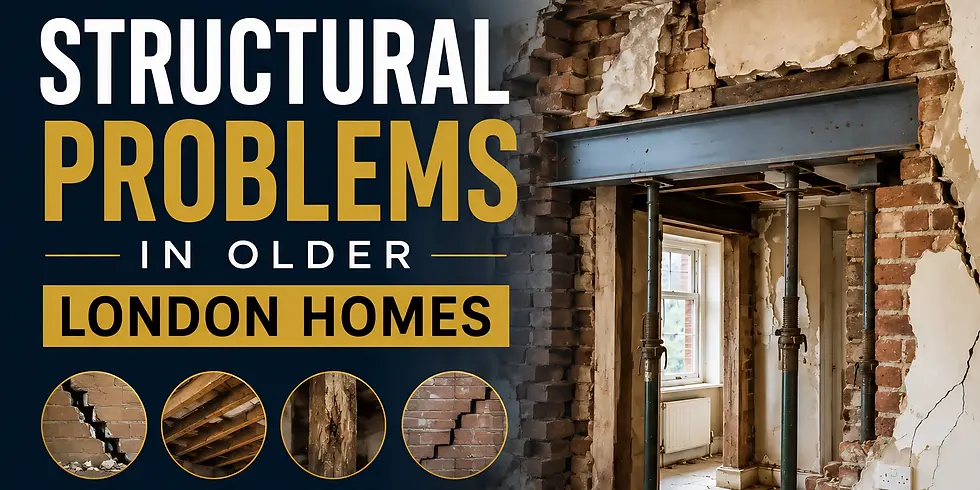
This is particularly common in open-plan kitchen renovations where load-bearing walls were altered incorrectly in the past.
Once builders expose these areas, structural engineers may need to assess the property before work can continue safely.
Structural repairs can significantly impact renovation timelines and budgets, especially if additional steelwork or reinforcement becomes necessary.
However, identifying these issues early is essential for ensuring the long-term safety and stability of the home.
Outdated Electrical Wiring and Unsafe Installations
Electrical systems in older London homes are often outdated and no longer suitable for modern living requirements.
Many properties still contain ageing wiring systems that may not meet current UK safety regulations.
During renovation work, electricians commonly discover:
Old rubber-insulated wiring
Unsafe fuse boards
Overloaded circuits
DIY electrical modifications
Poor-quality extensions
Damaged or exposed cables
Inadequate socket capacity
Older electrical systems can struggle to support:
Modern kitchen appliances
Smart home systems
Underfloor heating
EV chargers
Home office equipment
Contemporary lighting systems
Unsafe wiring creates serious risks, including:
Electrical fires
Power outages
Electric shock hazards
Insurance complications
In many renovation projects, homeowners initially plan only cosmetic upgrades but later discover a full rewire is necessary once walls and ceilings are opened. Although rewiring increases short-term costs, it is often one of the most valuable long-term investments during a house renovation.
Plumbing Problems Hidden Beneath Floors
Plumbing issues are another common surprise during London renovation projects.
Many older homes contain ageing pipework that gradually deteriorates over time. Corrosion, leaks, and poor historical repairs are frequently uncovered once flooring or walls are removed.
Builders and plumbers often discover:
Corroded pipes
Lead pipework
Hidden leaks
Poor drainage systems
Weak water pressure
Damaged waste pipes
Incorrect plumbing installations
In some cases, small hidden leaks may have caused years of unnoticed water damage beneath timber floors or behind walls.
Plumbing issues can become particularly expensive if they are only discovered after kitchens, bathrooms, or flooring have already been installed.
For this reason, many experienced renovation companies recommend upgrading outdated plumbing systems during major refurbishments instead of delaying repairs until later.
Hidden Roof Problems and Loft Damage
Roof spaces often reveal serious hidden issues during loft conversions or full house renovations.
Many homeowners rarely inspect their loft areas properly, allowing damage to develop unnoticed for years.
During renovation work, contractors frequently uncover:
Timber rot
Roof leaks
Weak rafters
Insect infestation
Poor insulation
Condensation issues
Inadequate ventilation
Historic water damage
Roof problems can affect both structural stability and energy efficiency.
Poor insulation and ventilation may also contribute to:
Heat loss
Condensation build-up
Mould growth
Increased energy bills
Addressing roofing problems early during a renovation project is usually far more cost-effective than postponing repairs.
Asbestos in Older London Properties
Asbestos remains a major concern in many UK homes built before 2000.
Although asbestos was widely used in construction materials for decades, it is now known to present serious health risks when disturbed.
During London renovation projects, asbestos may be discovered in:
Ceiling coatings
Floor tiles
Pipe insulation
Garage roofs
Partition walls
Artex finishes
Boiler cupboards
Many homeowners are completely unaware asbestos exists within their property until renovation work begins.
If asbestos-containing materials are damaged or disturbed, microscopic fibres can enter the air and pose significant health risks.
Professional asbestos surveys are often recommended before major refurbishment projects, especially in older London homes.
If asbestos is identified, licensed removal specialists may need to safely manage or remove the material before construction can continue.
Poor Workmanship From Previous Renovations
One of the biggest hidden problems builders encounter during London renovations is poor-quality workmanship from previous contractors.
In many properties, cosmetic improvements hide deeper construction defects that only become visible once work begins.
Common examples include:
Uneven flooring
Unsupported wall removals
Unsafe electrics
Poor plumbing installations
Incorrect roof repairs
Inadequate insulation
Bad plastering
Low-quality extensions
Some homeowners discover that previous builders failed to follow building regulations properly or used substandard materials to reduce costs.
Correcting previous mistakes often becomes more expensive than completing the original renovation work itself.
Unfortunately, these problems are difficult to identify during normal property viewings and often remain hidden until walls, ceilings, or floors are opened.
Problems Caused by Inadequate Insulation
Insulation issues are extremely common in older London homes.
Many period properties were built before modern energy efficiency standards existed, resulting in:
Heat loss
Draughts
Cold walls
High heating bills
Condensation problems
During renovations, builders often uncover:
Missing insulation
Damaged insulation
Poorly installed insulation
Thermal bridging issues
Upgrading insulation during a renovation can dramatically improve:
Comfort
Energy efficiency
Property value
Indoor air quality
Many London homeowners now prioritise energy-efficient renovation upgrades due to increasing energy costs and changing environmental standards.

Party Wall and Neighbouring Property Issues
London renovation projects often involve terraced or semi-detached properties where neighbouring structures are closely connected.
During renovation work, builders may uncover:
Shared structural weaknesses
Party wall defects
Boundary issues
Historic neighbour alterations
These issues can complicate renovation timelines and may require additional legal agreements or structural assessments.
Party wall matters are especially common during:
Loft conversions
Rear extensions
Basement excavations
Structural wall removals
Proper planning and communication are essential to minimise delays and disputes.
Hidden Problems That Increase Renovation Costs
Unexpected renovation issues are one of the main reasons renovation budgets increase during construction projects.
Even carefully planned refurbishments may require additional work once hidden defects are uncovered.
Common unexpected renovation costs include:
Structural reinforcement
Damp treatment
Rewiring
Plumbing replacement
Roof repairs
Asbestos removal
Timber replacement
Insulation upgrades
For older London homes, many contractors recommend keeping a contingency budget of approximately 10–20% to cover unforeseen issues.
Although unexpected costs can feel frustrating, resolving these problems properly often protects the property from much larger expenses in the future.
How Professional Builders Reduce Renovation Risks
While hidden problems cannot always be avoided completely, experienced renovation professionals can significantly reduce risks through detailed inspections and careful planning.
Professional contractors typically:
Conduct thorough site surveys
Inspect structural conditions early
Assess roof spaces
Review electrical systems
Check plumbing infrastructure
Identify damp risks
Coordinate with structural engineers
Follow building regulations carefully
Experienced builders also communicate openly with homeowners throughout the project, ensuring any newly discovered issues are explained clearly along with practical solutions.
Working with knowledgeable renovation specialists who understand older London properties can make a major difference to the success of a project.
Why London Renovations Require Specialist Experience
Renovating properties in London is rarely straightforward.
Unlike newer developments, older London homes often contain layers of historic alterations, ageing materials, and hidden structural complexities.
Each property comes with unique challenges depending on:
Age
Construction method
Previous renovations
Location
Maintenance history
Builders without proper experience in London renovations may overlook serious warning signs during the planning stage.
This is why homeowners should always choose contractors with proven experience handling:
Victorian renovations
Structural refurbishments
Period property upgrades
Loft conversions
Full house renovations
Experienced professionals are better equipped to anticipate hidden problems before they become major construction setbacks.
Final Thoughts
Hidden problems are a normal part of many London renovation projects, particularly in older homes with long histories of previous alterations and ageing construction materials.
From damp and structural movement to outdated wiring and hidden roof damage, many issues only become visible once renovation work begins.
Although these discoveries can increase costs and timelines, addressing them properly is essential for creating a safe, durable, and high-quality living environment.
Careful planning, realistic budgeting, and working with experienced renovation specialists can help homeowners navigate these challenges far more effectively.
At NILO Construction, we understand the hidden complexities that often arise during London renovations. Our team has extensive experience working with period properties, structural refurbishments, loft conversions, extensions, and full home renovations across London. By identifying problems early and delivering transparent, professional solutions, we help homeowners complete renovation projects with confidence and long-term peace of mind.
FAQs
What hidden problems are commonly found during London renovations?
Some of the most common hidden problems include damp, structural movement, roof damage, outdated electrical wiring, plumbing leaks, timber rot, and poor workmanship from previous renovations.
Why do renovation projects in London go over budget?
Many renovation projects exceed their original budgets because hidden problems are discovered after construction begins. Structural repairs, rewiring, damp treatment, and asbestos removal can all increase costs unexpectedly.
Are structural problems common in older London homes?
Yes. Many older London properties experience structural movement over time, particularly Victorian and Edwardian homes. Builders often uncover cracked walls, sagging floors, or weakened timber structures during renovations.
Can renovations uncover asbestos?
Yes. Asbestos is still found in many UK properties built before 2000. It may be hidden within ceilings, insulation, floor tiles, or wall materials and is often discovered during demolition or refurbishment work.
How can homeowners reduce renovation risks?
Homeowners can reduce risks by hiring experienced contractors, arranging detailed property inspections, planning realistic budgets, and allowing contingency funds for unexpected issues.
Is damp a serious problem during renovations?
Yes. Damp can lead to mould growth, timber decay, damaged plaster, and poor indoor air quality. Identifying the source of moisture early is essential for preventing long-term property damage.
Should old electrical wiring be replaced during renovation work?
In many cases, yes. Older wiring systems may not meet modern UK safety standards and could present fire or safety risks. Renovation projects often provide the best opportunity to upgrade electrical systems properly.
How much of the contingency budget should be allowed for renovations?
Many renovation professionals recommend setting aside approximately 10–20% of the total project budget for unexpected costs, especially in older London properties.
Why is it important to hire experienced London renovation specialists?
Experienced London renovation companies understand the unique challenges associated with period properties, structural alterations, and local building regulations. This helps reduce delays, avoid costly mistakes, and improve project quality.


Comments